
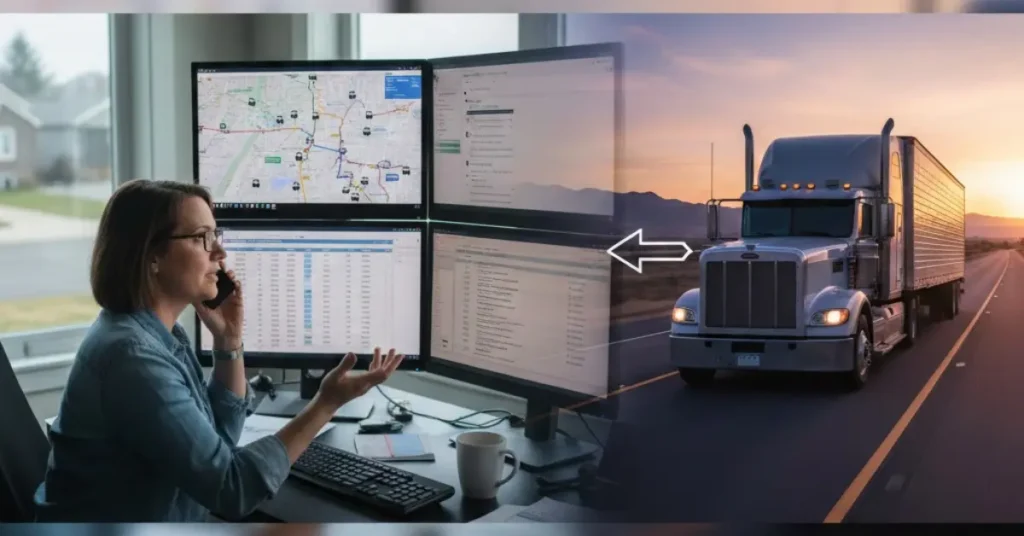
What a Truck Dispatcher Actually Does (No, It’s Not Just Booking Loads)
Discover what a truck dispatcher actually does—from booking loads and handling drivers to solving real-world trucking problems. Honest, practical, and easy to understand.
If you’ve never worked in trucking, the job of a truck dispatcher probably sounds simple. Almost too simple. People usually say something like, “Oh yeah, they just find loads for drivers.”
And every time I hear that, I kinda smile. Because… yeah, that’s part of it. But it’s like saying a pilot just “flies the plane.” Technically true, but missing a lot of the story.
In my experience, a truck dispatcher is part planner, part negotiator, part therapist, and part problem-solver—sometimes all in the same phone call. And trust me, those calls don’t always come at convenient times.
The Middle Person Nobody Sees (Until Something Goes Wrong)

A dispatcher lives in the middle of chaos. Drivers are out on the road dealing with traffic, weather, long waits, and exhaustion. Brokers and shippers are focused on moving freight cheaply and on time. The dispatcher stands between them, trying to keep everyone calm, paid, and moving forward.
When everything runs smoothly, no one notices the dispatcher. But when something goes wrong—and it always does—that’s when the dispatcher suddenly becomes very important.
Late pickup? Dispatcher.
Breakdown at 2 a.m.? Dispatcher.
Receiver won’t unload? Yep, dispatcher again.
Finding Loads: More Than Just Clicking “Book”
Let’s talk about load booking, because this is where most people think the job begins and ends. Dispatchers spend hours on load boards like DAT or Truckstop. But it’s not just scrolling and grabbing whatever pays the most.
You’re constantly asking yourself:
- Is this rate actually worth it?
- How much deadhead will the driver run?
- Is the broker decent or a headache?
- Does this load mess up the driver’s home time?
To be honest, some days it feels like speed dating—with freight. You make quick decisions, negotiate fast, and hope you didn’t miss a red flag.
And negotiation? Oh yeah, that’s a big one. Dispatchers push for better rates, detention pay, or flexible delivery times. A few extra cents per mile might not sound like much, but over a week? That’s real money for a driver.
Planning the Trip (And Praying Nothing Explodes)
Once a load is booked, the real thinking starts. Route planning isn’t just “Google Maps says this way.” You’ve got to consider hours of service, fuel stops, weather, construction, and sometimes… just bad luck.
I’ve seen perfect plans fall apart because of one snowstorm or a random DOT inspection. That’s trucking. Dispatchers have to think ahead, but also be ready to throw the plan out the window and improvise.
And yeah, sometimes you second-guess yourself. Should I have taken that other load? Maybe. Humans do that. Dispatchers too.
Talking to Drivers (A Lot)
Communication is basically the whole job. Dispatchers talk to drivers constantly. Calls, texts, updates, check-ins. And not all of them are happy conversations.
Drivers call when they’re frustrated, tired, or stuck at a shipper for five hours with no bathroom. You can’t just brush that off. A good dispatcher listens, even when they’ve heard the same complaint ten times that week.
Sometimes you’re the only person a driver talks to all day. That’s a weird responsibility when you think about it.
When Things Go Sideways (Because They Will)
Here’s the truth no one tells you early on: dispatching is mostly problem-solving.
Trucks break down.
Appointments get missed.
Paperwork disappears.
Receivers reject loads for reasons that make no sense.
And when it happens, everyone looks at the dispatcher like, “Okay, now fix it.”
You call brokers, reschedule deliveries, negotiate detention, find repair shops, or just try to calm everyone down. It’s stressful, not gonna lie. But it’s also where experience really shows.
This is where you earn your keep.
Paperwork
Nobody dreams of dispatching because they love paperwork. But paperwork matters. A lot.
Rate confirmations, BOLs, PODs—miss one document, and payment gets delayed. Drivers don’t like waiting for money (shocking, right?). Dispatchers make sure everything is collected, submitted, and followed up on.
It’s boring sometimes. But it keeps the business alive.
Home Time, Burnout, and Being Human
One thing I feel strongly about: dispatchers who ignore home time lose drivers. Period.
Drivers aren’t robots. They want to see their families, rest, live a life. Good dispatchers plan loads with that in mind. Bad ones just chase rates and wonder why drivers quit.
To be honest, retention often has less to do with money and more to do with respect.
Dispatchers as Business Partners
For owner-operators especially, dispatchers often act like unofficial business partners. They spot good lanes, avoid cheap freight, and help drivers think long-term.
Instead of asking, “What pays today?” a good dispatcher asks, “What works best over the next month?”
That mindset makes a huge difference.
Skills You Actually Need (That No One Mentions)
Being a dispatcher isn’t about fancy software. It’s about:
- Talking to people without losing your cool
- Making decisions fast, even with incomplete info
- Handling stress without snapping
- Knowing when to get forward and step back.
You learn a lot on the job. And yeah, you mess up sometimes. Everyone does.
So… What Does a Truck Dispatcher Actually Do?
If I had to sum it up? A dispatcher keeps the entire operation glued together. Quietly. Constantly. Often without credit.
They plan, negotiate, communicate, fix problems, and keep drivers moving—and paid. It’s not glamorous. It’s not easy. But it matters.
And honestly? Once you really understand dispatching, you start seeing trucking differently.
FAQs
What is the difference between a truck dispatcher and a freight broker?
This is a common one! Basically, a freight broker works for the shipper to find a truck. A truck dispatcher works for the carrier (the trucking company) to find a load. The dispatcher is on the driver’s side; the broker is the middleman in the middle.
Do I need a degree to be a truck dispatcher?
Not really. Most places look for experience and “soft skills” like multitasking and negotiation. However, taking a truck dispatcher training course can definitely help you understand the lingo and the software faster.
How much do truck dispatchers make?
It varies a lot! Some work on a salary (anywhere from $45k to $75k+), while independent dispatchers often charge a percentage of the load—usually between 5% and 10%. If you’re managing a high-volume fleet, the potential is pretty high.
Can you work as a dispatcher from home?
Totally. With modern cloud-based TMS software and load boards, many people are now remote truck dispatchers. As long as you have a laptop, a phone, and a solid internet connection, you can dispatch from your couch.
What software do truck dispatchers use?
Most pros use a mix of:
Load Boards: DAT, Truckstop.
TMS: TruckingOffice, Rose Rocket, or McLeod.
ELD/GPS Tracking: Samsara, Motive (formerly KeepTruckin).
Ever worked with a dispatcher before? Or thinking of becoming one yourself? I’m curious—what part of the job surprises you the most?
Let’s talk.
Related Posts
Truck Dispatching: A Complete Beginner’s Guide to Becoming a Dispatcher
Learn everything about truck dispatching—from what a dispatcher does to how to start your own dispatching business, find loads, get […]
Read More →