
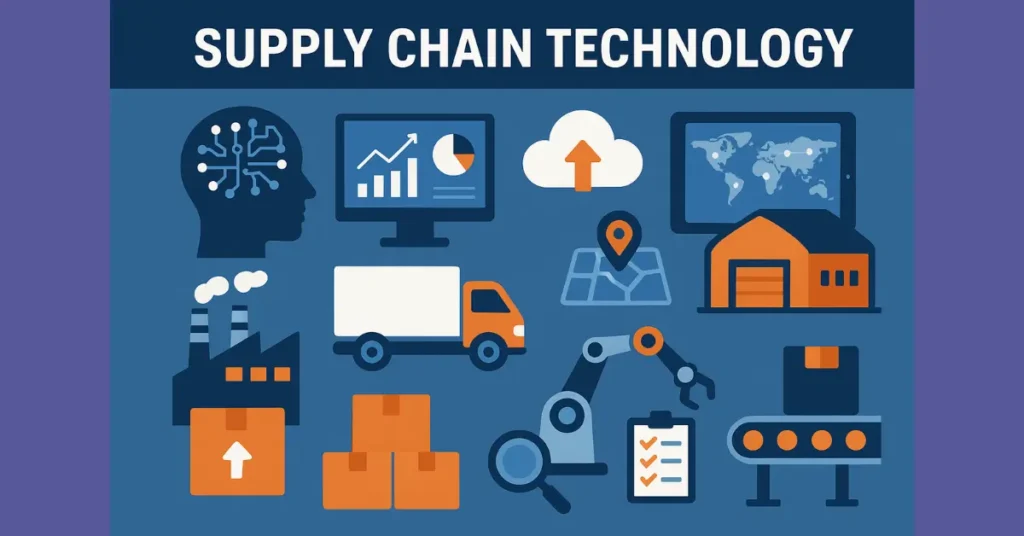
Supply Chain Technology: How the Next Wave of Tools Is Rewiring Logistics
Supply Chain Technology is no longer optional — it’s the backbone of resilient, efficient, and sustainable logistics. This article explores the key technologies reshaping the field, why they matter, and how companies can use them for growth and resilience.
The phrase Supply Chain Technology used to mean barcode scanners and basic ERP systems. Today, it stands for a sophisticated mix of tools — from AI-driven forecasting and real-time tracking to robotics and advanced inventory platforms — that transform logistics into a fast, data-driven ecosystem. Let’s explore the most impactful trends and how organizations can use them to stay competitive.
1. Artificial Intelligence and Machine Learning: The Smart Core of Supply Chains
Artificial intelligence (AI) and machine learning (ML) have become the operational brain of supply chains. From predicting demand to optimizing routes and detecting inefficiencies, AI helps reduce costs while increasing accuracy.
Modern systems use ML models to process large datasets — sales records, weather, and even social sentiment — to forecast demand and optimize operations. This level of precision is impossible with traditional manual systems. According to Transmetrics, AI-powered logistics optimization reduces human error, enhances efficiency, and allows planners to focus on strategic decision-making rather than repetitive tasks.
Pro Tip: Start small. Use AI for demand forecasting or route optimization before scaling to company-wide adoption.
2. Centralized Data: Building a Single Source of Truth
Technology investments fail when data is fragmented. Many companies still rely on spreadsheets or isolated ERP systems, which create silos. Centralizing data through cloud-based supply chain management platforms helps unify operations across procurement, manufacturing, transportation, and sales.
With a single source of truth, analytics become more accurate and decision-making more confident. Data hygiene — cleaning duplicates, standardizing formats, and removing noise — is essential before deploying advanced analytics or automation.
Pro Tip: Prioritize data quality. Invest in master data management tools before implementing predictive analytics or AI.
3. Predictive Analytics and Scenario Planning
Forecasting has evolved from monthly estimates to dynamic, real-time predictions. Predictive analytics helps businesses anticipate future demand, supply disruptions, and capacity needs based on current trends and historical data.
Scenario planning, on the other hand, allows teams to simulate events like port strikes, fuel price spikes, or raw material shortages. This digital “rehearsal” helps companies prepare contingency plans before disruptions occur.
Pro Tip: Use predictive models to test “what-if” scenarios monthly and adjust safety stock and capacity plans accordingly.
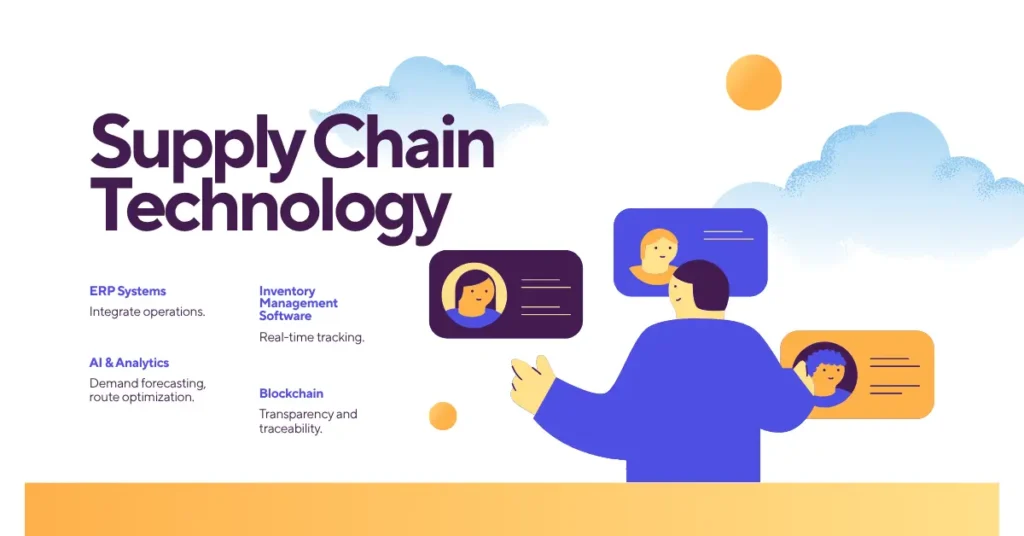
4. Inventory Management Platforms: Smarter Stock Control
Inventory is the beating heart of every supply chain. Modern inventory management platforms go beyond tracking — they orchestrate replenishment, balance stock across locations, and even automate reordering.
A Supply Chain Digital report highlights that leading systems like Oracle Netsuite, SAP, and Zoho Inventory offer real-time stock updates, AI-based demand planning, and multi-channel synchronization. These platforms help prevent overstocking, stockouts, and inefficiencies.
Pro Tip: Pilot a platform on high-turnover SKUs to measure improvements in fill rate and days of inventory before full rollout.
5. IoT and Real-Time Visibility
The Internet of Things (IoT) has transformed visibility in logistics. GPS trackers, smart sensors, and telematics systems provide real-time data on shipments, equipment, and warehouse conditions.
IoT-enabled platforms send alerts when goods are delayed, temperatures fluctuate, or assets deviate from planned routes — crucial for cold chain and high-value products. Integration with AI systems allows dynamic rerouting and proactive updates for customers.
Pro Tip: Begin IoT implementation with critical lanes or temperature-sensitive goods to showcase ROI quickly.
6. Automation and Robotics: Transforming Warehouses and Last Mile
Automation is reshaping how goods move from factories to customers. In warehouses, robots and automated storage systems handle repetitive tasks faster and more accurately. In the last mile, algorithms optimize delivery routes to save fuel and time.
However, automation isn’t about replacing humans. It’s about collaboration — robots handle repetitive jobs while humans focus on quality control and exception management.
Pro Tip: Introduce gradual automation (e.g., pick-to-light systems) and train workers to operate alongside robotic systems.
7. Sustainability Through Technology
Sustainability is now a key KPI in supply chains, and technology is the primary enabler. According to AIMS Education, eco-friendly logistics strategies — such as smart routing, energy-efficient warehouses, and digital freight matching — can drastically reduce carbon footprints.
Digital tools also help companies measure emissions across their networks, allowing optimization for both cost and sustainability. As ESG (Environmental, Social, and Governance) reporting becomes mandatory in many regions, companies using digital supply chain tracking gain an advantage in compliance and branding.
Pro Tip: Use route optimization software to reduce empty miles and emissions while maintaining delivery performance.
8. The Platform Ecosystem: Integrate, Don’t Isolate
No single software can handle every aspect of the supply chain. The modern strategy is to integrate specialized platforms — such as Transportation Management Systems (TMS), Warehouse Management Systems (WMS), and inventory tools — into a unified digital ecosystem.
Cloud integration and APIs make this possible. This interconnected setup ensures smooth data flow between departments, enabling real-time decision-making and automated workflows.
Pro Tip: Choose software that offers open APIs and pre-built integrations for maximum scalability.
9. Change Management: The Human Side of Transformation
Adopting new technology often fails because of poor change management. Employees must be trained to use new systems confidently. Create internal champions who understand both operations and technology to guide adoption.
Encourage teams to treat automation and analytics as allies, not threats. When people trust the tools, they make better use of them — and that’s where transformation truly happens.
Pro Tip: Track system adoption rates, not just software uptime. The goal is engagement, not installation.
10. The Roadmap: From Pilot to Scale
Here’s a practical five-step roadmap for deploying Supply Chain Technology efficiently:
- Clean and centralize data: Build a unified data foundation.
- Run small AI or inventory pilots: Test solutions before scaling.
- Deploy IoT sensors: Enhance visibility in critical lanes.
- Automate select processes: Use robotics or software bots for repetitive tasks.
- Monitor and optimize: Measure KPIs (fill rate, on-time delivery, CO₂ per order) continuously.
This structured approach minimizes risk, speeds adoption, and ensures every tech investment delivers ROI.
Final Thoughts
Supply Chain Technology is not just a competitive advantage — it’s a survival necessity. Companies that embrace AI, IoT, automation, and data integration will not only reduce costs but also build agile, transparent, and sustainable supply chains.
From predictive analytics to carbon tracking, the future belongs to organizations that treat technology as the central nervous system of their logistics operations. The era of digital-first supply chains is here — and those who act now will lead the next generation of global commerce.
Related Posts
Agentic AI: Your Logistics Operation’s New Digital Employee
Forget Chatbots. It’s Time for Agentic AI That Actually Gets Things Done. Alright, let’s have a real talk about Agentic […]
Read More →
The AI Revolution in Logistics: How Artificial Intelligence is Reshaping the Global Supply Chain
Introduction: The Dawn of a New Era in Logistics What is the AI Revolution in Logistics? The world of logistics, […]
Read More →
Warehouse Management Systems: A Real-World, Down-to-Earth Solution for Today’s Warehouses
A friendly, conversational explainer on Warehouse Management Systems (WMS), how they work, why they matter, and how they can actually […]
Read More →